Learn Baloot — the complete rules with pictures
From the first card to the last sakka: how the cards are dealt, how to bid Hokum or Sun, what every card is worth, when you hold a project, and what Double and Qayd mean — all with clear pictures of the cards, then you try it at a real table.
What is Baloot?
Baloot is a Saudi card game for four players in two teams: you and your partner sit opposite each other, with the opponents to your right and left. The deck has thirty-two cards — Seven through Ace in all four suits — dealt eight to each player and played over eight tricks.
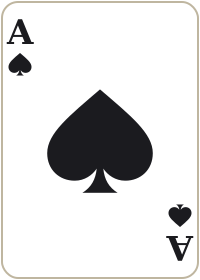
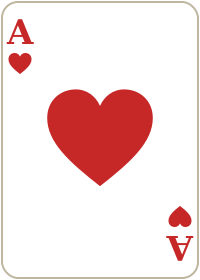
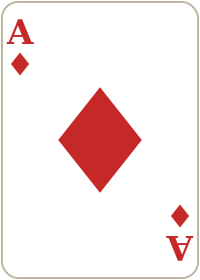
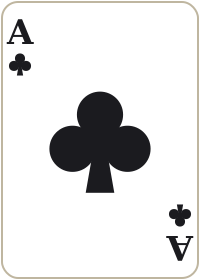
The four suits are Clubs (♣, Sheriya), Hearts (♥, Has), Diamonds (♦, Diman) and Spades (♠, Bastoni). You win not by the number of tricks but by the points inside them: you can take five empty tricks while your opponent takes three holding the Aces and Tens, and they come out ahead. The match goes to the first team to reach 152 points.
The deal and the face-up card
- The dealer gives each player three cards, then two more — five cards in every hand.
- Then one card is turned face up on the table: the face-up card, whose suit the first round of bidding is about.
- After the bid the rest are dealt: three to each player, and the bidder takes the face-up card plus two — so every hand ends with eight cards.
Waraq: a player whose first five cards are all Sevens, Eights and Nines — no court card, no Ten, no Ace — may call "Waraq" before any bid and the cards are dealt again.
Bidding: Hokum or Sun
Bidding has two rounds, each starting with the player after the dealer:
The first round
- Hokum: you take the hand and the face-up card's suit becomes trump.
- Sun: you take the hand with no trump.
- Bas: you pass.
The second round
If all four pass, a second round opens where you may choose Hokum in a suit other than the face-up card's, or Sun, or say "Wala". If everyone passes again, the cards are dealt again.
Once someone has bid Hokum the others can only pass, and when the turn comes back to the bidder they may switch it to Sun.
Ashkal: for the dealer or the player before them only: they bid Sun and the face-up card goes to their partner instead of to them. It cannot be called over a Sun.
The bidder needs more than half the points, or they "fall" and the whole hand goes to the opponents (see Scoring). So never bid on a weak hand.
Card order and values
In Hokum — the trump suit
In the trump suit the Jack jumps to the top, then the Nine, and any trump beats every card of another suit:
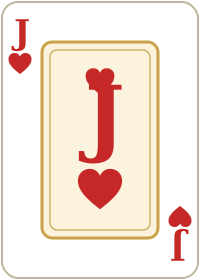
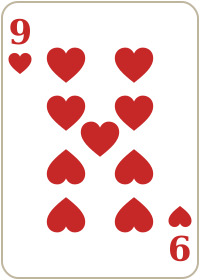
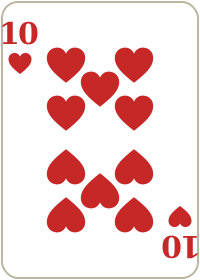
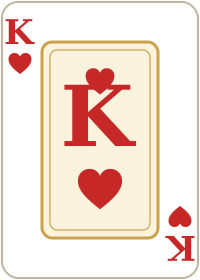
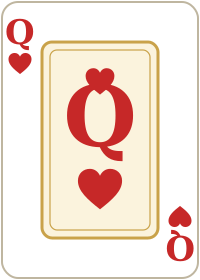
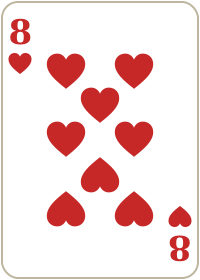
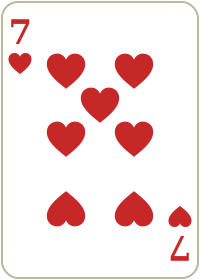
In Sun — and in the non-trump suits
In Sun (and in the three non-trump suits) the Jack and the Nine return to their natural place:
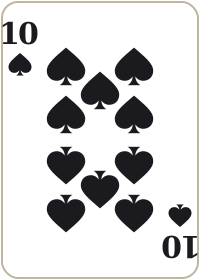
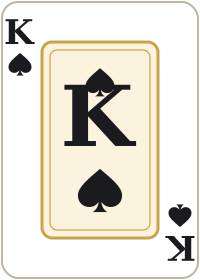
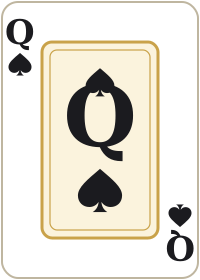
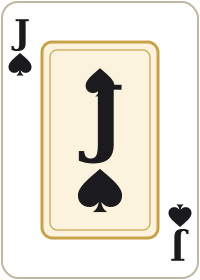
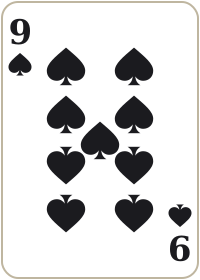
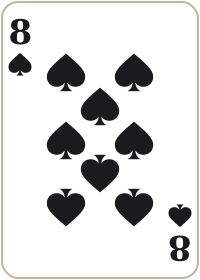
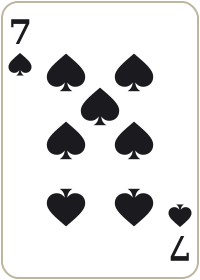
So the cards total 152 points in Hokum and 120 in Sun, and whoever takes the last trick adds ten more (the "Ard").
Play: following suit and trumping
The player after the dealer leads first, and whoever wins a trick leads the next. Every player must:
- Follow the suit led as long as they hold it.
- If trump is led, play a higher trump than any on the table if they can.
- If they cannot follow and the trick belongs to an opponent, trump it — above the highest trump on the table if they can.
- If the trick belongs to their partner they need not trump — they feed it a valuable card instead.
- In Sun there is no trump and no cutting: a player who cannot follow throws anything.
Sawa: a player who is certain that all the remaining tricks are theirs says "Sawa" and shows their cards; the hand ends and is scored for them.
Projects with pictures
A project is a set of cards in your hand that you declare with your first card, adding to your team's points — it does not count if it is not declared, nor for a team that took no trick at all. One card cannot serve two projects: if a Sira overlaps a Miyah, only the Miyah counts.
Sira — 20 points
Three cards in sequence in one suit:
Khamsin — 50 points
Four cards in sequence in one suit:
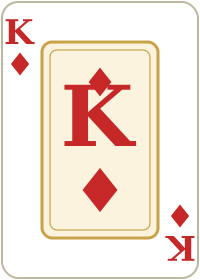
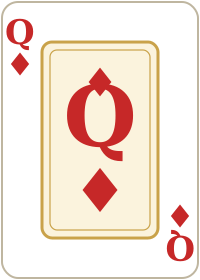
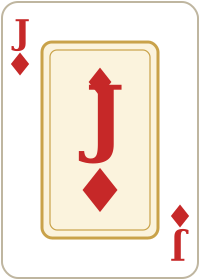
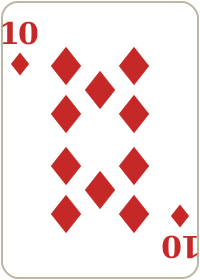
Miyah — 100 points
Five cards in sequence in one suit:
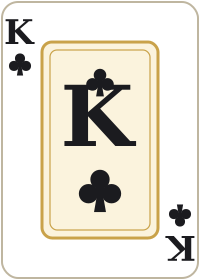
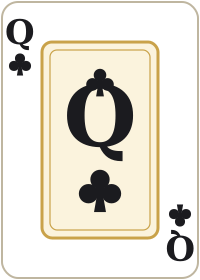
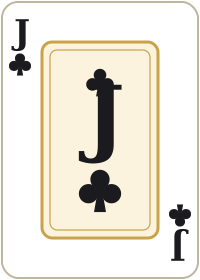
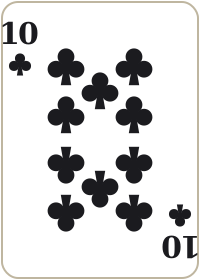
Or four cards of one rank: four Kings, four Queens, four Jacks or four Tens — in Hokum and in Sun:
Miyah in Hokum — four Aces
The four Aces in Hokum are a Miyah, not an Arba Miya:
Arba Miya — four Aces in Sun
The four Aces in Sun are the Arba Miya (400) — the biggest project in Baloot. Four Sevens, Eights or Nines are no project at all.
Baloot — 20 points
The King and Queen of the trump suit only, declared with the second of the two cards. There is no Baloot in Sun, and it is never doubled.
Scoring a hand and Qabd
Each team adds up its points: the cards in its tricks, the ten for the last trick (Ard), and its projects. Then points are converted:
- In Hokum: points are divided by ten — 162 points = 16 game points. A remainder above five rounds up, and exactly five rounds down.
- In Sun: points are doubled and then divided by ten — 130 × 2 = 26 game points. Exactly five rounds up.
| Project | In Hokum | In Sun |
|---|---|---|
| Sira | 2 | 4 |
| Khamsin | 5 | 10 |
| Miyah | 10 | 20 |
| Four Aces | 10 (Miyah) | 40 (Arba Miya) |
| Baloot | 2 | — |
Qabd: when does the bidder lose?
If the bidder's opponents reach the following card points (including the Ard), the bidder "falls" and all the hand's points — cards and projects — go to the opponents:
| Opponents' project | In Hokum (of 162) | In Sun (of 130) |
|---|---|---|
| No project | 82 | 66 |
| Sira | 72 | 56 |
| Khamsin | 56 | 41 |
| Miyah or Arba Miya | 32 | 16 |
Doubling and its levels
After the bid the raises open, each one called by the other side in answer to the one before:
| Level | Called by | Effect |
|---|---|---|
| Double | The opponent after the bidder — or their partner if they pass | Card points ×2, and projects are doubled |
| Three | The bidder — in Hokum only | Card points ×3 |
| Four | The doubler | Card points ×4 |
| Gahwa | The bidder | Whoever wins the hand wins the whole match |
- Maqfool (locked): in Hokum a Double or Four can be called "locked", so no one may lead trump while holding another suit. Three and Gahwa are always open.
- Double in Sun: only the Double, with no Three, Four or Gahwa — and only when the bidder's score is above 100 and the doubler's is 100 or less.
- Whoever raised last is counted as the bidder, and a tie goes against them. Projects are doubled by a Double but not raised further by Three or Four, and Baloot is never doubled.
Qayd
At a real table nobody stops you from playing any card — play is open. If a player breaks the rules, an opponent calls "Qayd" and points to the wrong card. There are three violations:
- Cut while holding the suit: played a card of another suit while holding the suit led.
- Did not trump: could not follow, held a trump, and did not trump while the trick belonged to an opponent.
- Did not overtrump: played a trump lower than the one on the table while holding a higher one.
If the Qayd is right, the claimer takes all the hand's points; if it is wrong, they go against the claimer. So only call Qayd when you are sure.
Frequently asked questions about Baloot rules
How many cards are in Baloot?
Thirty-two: Seven through Ace in all four suits, eight cards for each of the four players.
How many points do you need to win Baloot?
One hundred and fifty-two points. A single hand is worth 16 points in Hokum and 26 in Sun, before projects.
Are four Aces a project in Hokum?
Yes. Four Aces in Hokum are a Miyah (100). In Sun they are the Arba Miya (400), the biggest project in Baloot.
What is the difference between Hokum and Sun?
In Hokum one suit becomes trump and beats every other suit; its Jack jumps to 20 points and its Nine to 14. In Sun there is no trump and points are doubled, so a Sun hand is always worth more than a Hokum hand.
What is a Double in Baloot?
A raise called by the bidder's opponent after the bid, doubling the hand: Double ×2, then the bidder answers Three ×3, then the doubler Four ×4, then the bidder Gahwa, where whoever wins the hand wins the match. In Sun only the Double exists.
What is a Qayd in Baloot?
If a player breaks the rules — cuts while holding the suit led, fails to trump, or fails to overtrump — an opponent calls "Qayd" and points to the card. If the claim is right, the claimer takes the whole hand; if it is wrong, the hand goes against them.
When does the bidder lose (Qabd)?
In Hokum when the opponents reach 82 of 162 points, in Sun 66 of 130 — and the threshold drops if the opponents hold a project. A bidder who falls loses the whole hand to the other side.
Where can I practise Baloot for free?
On Balotk: open "Training" in your browser and sit at a real table with three computer players and illustrated lessons on card order, projects, doubling and Qayd.
Read also: How to play Saudi Baloot · Play Baloot online free · All six Balotk games